Marketing in 2025 is not about running random ads, posting content without strategy, or hoping leads magically appear. It’s about designing a conversion-ready marketing funnel—a system that takes people from “I don’t know who you are” to “I trust you, and I’m ready to buy.” Whether you’re a small business owner in Roorkee, a service provider in Uttarakhand, or a digital entrepreneur targeting global clients, a strong marketing funnel is the backbone of growth.
Surprisingly, most small businesses still don’t use a structured funnel. They spend money on ads, SEO, and social posts—but miss the strategy that turns traffic into paying customers. In this article, we break down how to build a funnel that actually converts in 2025, using psychology, automation, AI, and modern consumer behavior.
What Exactly Is a Marketing Funnel?
A marketing funnel is a journey you design for your customers. It guides them from discovering your brand to becoming loyal customers. Without a funnel, you rely on luck. With a funnel, you rely on strategy. And in 2025, where customers have thousands of choices and shorter attention spans, a proper funnel is not optional—it’s essential.
Think of it like a guided path:
Attention → Interest → Trust → Conversion → Loyalty
This journey can be short (for local services) or long (for high-ticket products). A well-built funnel works 24/7, even when you’re sleeping—it attracts leads, educates them, and warms them up automatically until they’re ready to buy.
Why Marketing Funnels Matter Even More in 2025
Consumer behavior has changed drastically. Users now switch between devices, use AI-driven search, browse multiple platforms, and expect instant value. A marketing funnel helps you stay visible and relevant throughout their decision-making journey. More importantly, it ensures you don’t lose leads because of poor follow-up or lack of nurturing.
Trends making funnels essential in 2025:
- 📌 AI tools allow businesses to automate nurturing like never before
- 📌 Paid ads are more expensive—funnels help maximize conversions
- 📌 Users need trust before they buy
- 📌 Competition is higher in every niche
- 📌 Consumers demand personalization
Without a funnel, your marketing is disconnected. With a funnel, every touchpoint has a purpose.
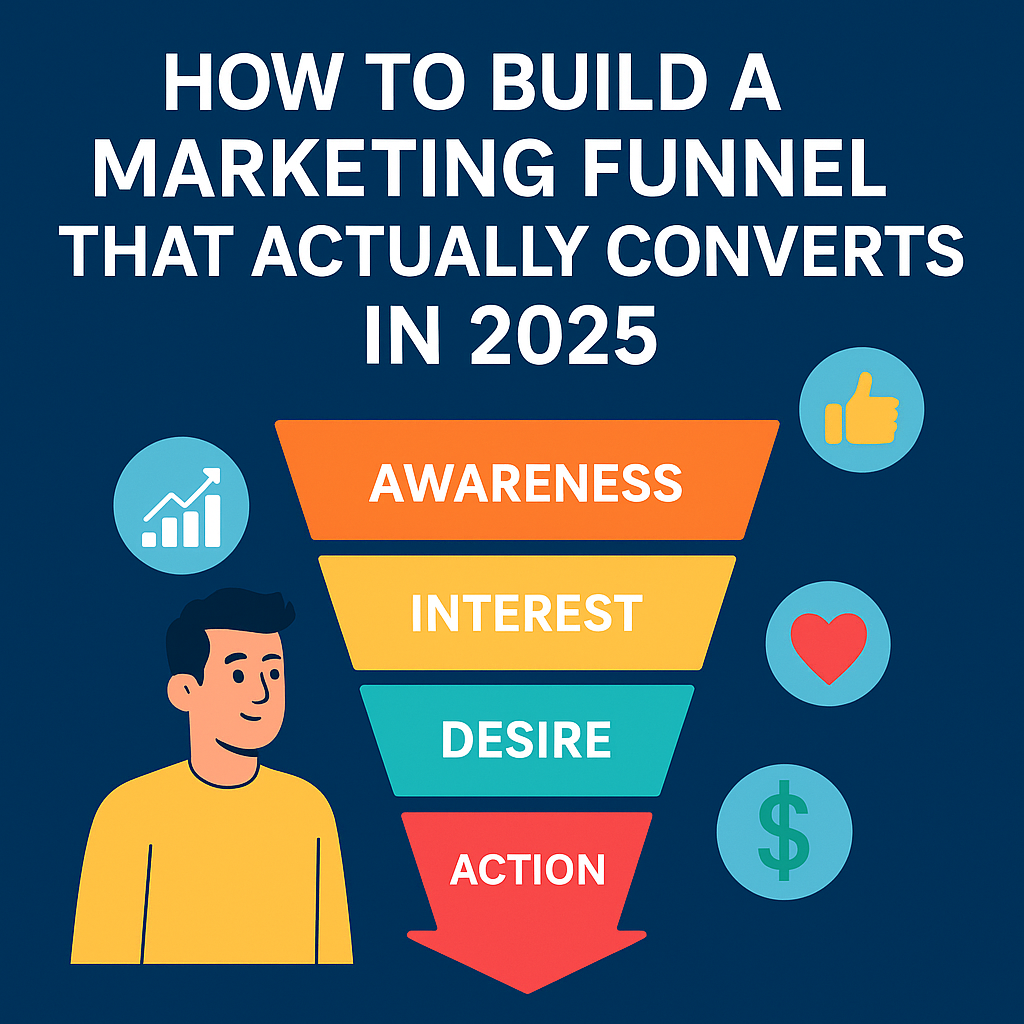
The 4 Stages of a High-Converting Marketing Funnel
Every effective funnel—whether for local shops, coaching institutes, real estate, freelancers, or e-commerce—follows four essential stages. Let’s break them down with simple examples and practical insights.
1. Awareness (Top of the Funnel)
This is where people first discover your brand. They may not need your product yet, but your job is to capture their attention with value. In this stage, your content should solve problems, educate, or inspire—not sell aggressively.
Best Awareness Strategies:
- SEO blog articles targeting real user queries
- Social media content (Reels, carousels, tips)
- YouTube shorts and educational videos
- Google Display Ads for brand visibility
- Influencer micro-collaborations
For small businesses in Roorkee or Uttarakhand, awareness can also come from localized SEO, Google Maps ranking, and community engagement.
Your existing SEO article also helps in giving this stage strength:
SEO vs PPC Guide
2. Interest (Middle of the Funnel)
Once people discover you, they become curious. This is the stage where they engage more deeply—visit your website, check your services, read more articles, watch videos, or follow your social handles. Your goal here is to educate them and build trust gradually.
Ways to Build Interest:
- Landing pages explaining services clearly
- High-value blog posts
- Case studies and testimonials
- Email newsletters and lead magnets
- Retargeting ads
This is where users begin comparing you with competitors. Clear communication and transparency help you stand out.
3. Desire (Trust-Building Stage)
This is the emotional stage. People now want what you offer—but need reassurance before taking action. They read reviews, ask for quotes, compare pricing, and try to understand your value in depth.
Tools to Build Desire:
- Social proof
- Video testimonials
- Comparison charts
- Limited-time offers
- Clear pricing explanation
- Personalized recommendations
Users in this stage begin seeing you as the right option—but they need one last push.
4. Action (Bottom of the Funnel)
This is where the conversion happens—an appointment, purchase, call, or message. Your goal now is to remove friction and guide them toward the final step smoothly.
How to Improve Conversions:
- Simple call-to-action buttons
- Click-to-call or WhatsApp buttons for mobile
- Fast-loading contact pages
- Clear and short forms
- Urgency triggers (“only 3 slots left”)
Your website must be fast and clean. For that, your speed optimization guide is very useful:
Website Speed Optimization
Funnel Example for a Small Local Business (Roorkee Use Case)
Let’s take a practical example—a local home service provider or coaching center in Roorkee. Here’s how a real funnel would work:
Awareness
Reels showing results, SEO blogs, local ads.
Interest
User visits website or landing page and reads about services.
Desire
Testimonials, before-after photos, FAQ section, pricing.
Action
WhatsApp click-to-chat button + clear contact form.
A simple funnel like this can double conversions for local businesses.
Using AI in Your Funnel (Huge Advantage in 2025)
AI now allows even small businesses to build advanced funnels without complicated tools. From automated emails to tailored landing pages, AI personalizes the customer journey based on behavior.
AI Supports Funnels By:
- Writing nurturing emails
- Generating ad creatives
- Tracking user journey
- Predicting buyer intent
- Personalizing content
This allows small businesses to act like big brands—without the budget of one.
Tools You Can Use to Build Funnels in 2025
The software doesn’t matter as much as the strategy, but here are excellent platforms that help:
- HubSpot
- Mailchimp
- GoHighLevel
- Notion AI
- Meta Ads Manager
- Google Analytics + Tag Manager
- Elementor or block themes for landing pages
Pick tools that fit your workflow—not the other way around.
Common Funnel Mistakes to Avoid (Most Businesses Fail Here)
Even good funnels fail due to basic mistakes. Avoid these:
- Trying to sell immediately
- Not nurturing leads via email/WhatsApp
- Slow-loading website
- Landing pages that confuse users
- No follow-ups
- No retargeting ads
- Too much information at once
A funnel should feel easy, natural, and helpful—not overwhelming.
Conclusion — Funnels Are the Heart of Modern Marketing
A marketing funnel is not just a strategy; it’s a system that grows your business consistently. In 2025, with rising competition, shorter attention spans, and AI-driven personalization, having a funnel gives you unbeatable advantage.
Whether your business is in Roorkee, Uttarakhand, or anywhere globally—a well-structured funnel can change everything. Build one step at a time, nurture your audience, earn trust, and the conversions will follow effortlessly.
— TEB Solutions Marketing Blog