Complete Guide for Beginners, Marketers & Small Businesses
Search has changed more in the last two years than it did in the previous ten. With AI-driven search, Google’s Search Generative Experience (SGE), algorithm updates, and new behavior patterns, SEO in 2025 feels like a completely new game.
But here’s the good news — if you understand how AI works and how people search today, you can grow faster than ever.
This guide breaks down exactly how AI is reshaping SEO — in a simple, humanized, conversational way — whether you’re a local business in Roorkee/Uttarakhand, a content creator, a marketer, or a startup owner.
Why SEO Is Changing — And Why AI Is Now Running the Show
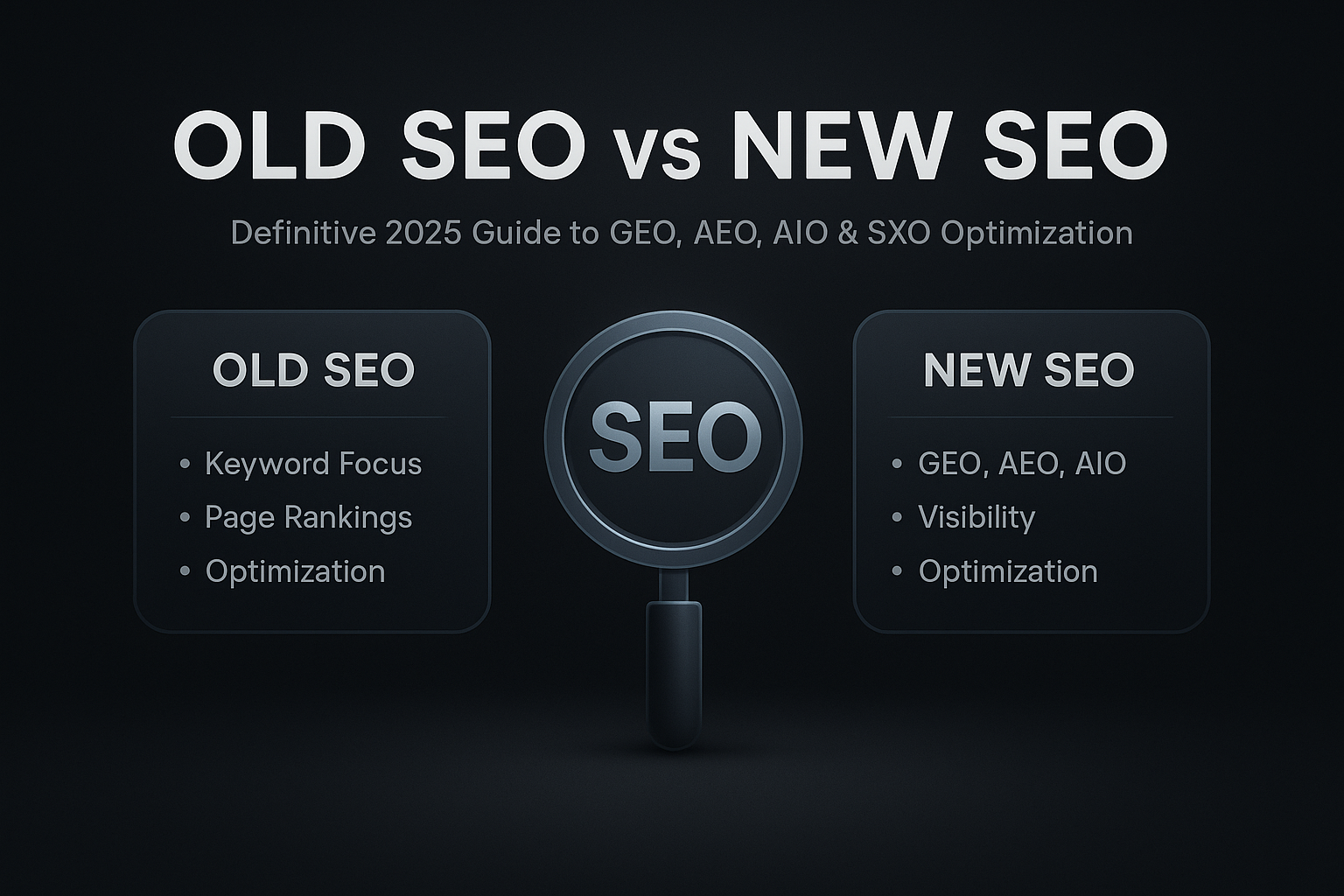
There was a time when SEO was about keywords, backlinks, and some on-page tweaks.
That time is gone.
Search engines have moved from “matching keywords” to “understanding intent.”
From “ranking pages” to “providing answers.”
And AI is the engine behind all of it.
In 2025, Google, Bing, and even alternative search ecosystems are powered by AI models that:
- Understand the meaning behind searches
- Interpret user behavior and search history
- Decide whether to show AI answers or website links
- Score content for accuracy, expertise, authority & usefulness
- Detect low-quality, AI-generated, or duplicate content
- Prioritize helpful, trustworthy, human-focused content
In short: **AI is not just a tool — it is now the new SEO judge.**
AI Revolution #1: Search Generative Experience (SGE)
One of the biggest SEO disruptions is AI Overviews (formerly SGE).
This new system answers the user’s question directly on the search page, often without the need to click any website.
Example:
A user searches — “Best digital marketing strategies for small businesses.”
Instead of showing 10 blue links first, Google shows:
- An AI-generated summary
- Key points extracted from top-ranking websites
- Suggested follow-up questions
- Only a few links under the AI box
This means:
- High-ranking websites lose clicks
- Competition increases
- AI content snippets replace human-written snippets
- Long-tail questions are now answered instantly
BUT — here’s the opportunity…
AI Overviews still rely on websites with high-quality, structured, expert-driven content.
So if your content is authoritative, helpful, niche-specific, and formatted properly — you can still appear as a “source” for AI answers.
AI Revolution #2: Search Engines Favor EEAT More Than Ever
Google now evaluates content based on a stronger version of EEAT:
- E — Experience: Have you used it, done it, tested it?
- E — Expertise: Do you understand the topic deeply?
- A — Authority: Do others trust you?
- T — Trustworthiness: Are you honest, accurate & safe?
AI models can detect:
- Shallow or rewritten content
- No real-world examples
- Generic AI text without originality
- Missing author credibility
- Inaccurate or outdated facts
This is why Google rolled out multiple helpful content updates, removing millions of thin AI articles from rankings.
Bottom line: AI can help you write, but you must add human experience, insights, examples, and originality.
That’s why your blog posts (serverless, marketing, AI) must be:
- Specific
- Helpful
- Real-world oriented
- Written like a human, not an AI bot
AI Revolution #3: Keyword Research Is Now AI-Assisted
Traditional keyword tools (Ubersuggest, SEMrush, Ahrefs) are still great — but AI tools have changed how we discover keyword opportunities.
Modern AI tools can:
- Predict keyword difficulty more accurately
- Analyze competitor content depth
- Suggest missing subtopics in your article
- Map user intent clearly
- Identify low-competition long-tail opportunities
Instead of just “keyword lists,” AI gives “topic clusters,” “search journeys,” and “content roadmaps.”
In 2025, you don’t rank for keywords — you rank for topics.
So your SEO strategy should be:
- Create topic clusters
- Write deeper content than competitors
- Interlink articles properly
- Use AI to analyze gaps
AI Revolution #4: AI-Powered Content Creation (But With a Catch)
AI-generated content is fast, but search engines can detect low-quality AI content easily — especially content that is:
- Generic
- Repetitive
- Not fact-checked
- Poorly structured
- Lacking examples
But when combined with human editing, AI becomes the most powerful SEO tool ever created.
The winning formula for 2025:
AI + Human Expertise = High-ranking content 🎯
Here’s how professionals use AI today:
- Outline generation
- Research summarization
- Topic clustering
- Competitor gaps detection
- Meta descriptions, schema
- Rewriting for clarity
- Speeding up initial drafts
What they DON’T do is press “generate article” and publish directly.
In 2025, the best SEO content feels like:
- AI-assisted
- Human-written
- Experience-backed
- Value-dense
AI Revolution #5: AI Search Assistants Becoming New “Mini Search Engines”
ChatGPT, Gemini, Bing Copilot, and other AI assistants are becoming the “starting point” for millions of searches.
People now ask:
- “Which laptop is best for ₹60,000?”
- “Write a 30-day gym plan.”
- “Summarize this website.”
- “Give me marketing strategies for small businesses.”
This shifts SEO into a new direction:
- Create content that AI assistants can reference
- Create structured, factual, expert-backed content
- Provide data, numbers, examples AI can cite
AI assistants prefer content that is clear, structured, and credible — meaning your blog must feel like a trusted source.
AI Revolution #6: User Behavior Signals Matter More
AI analyzes millions of micro-signals to determine if users find your content helpful.
Key behavioral signals ranked by importance:
- Time spent on page
- Scrolling depth
- Click-to-call / click-to-WhatsApp
- Returning visitors
- How fast users bounce
If users come to your site and stay, scroll, or interact — AI sees your content as useful.
AI Revolution #7: Semantic SEO > Keyword SEO
AI understands context. Meaning your content must answer the “complete intent,” not just match keywords.
Example:
Keyword: “best AC for home”
Semantic intent includes:
- Best 1.5 ton ACs
- Inverter vs non-inverter
- Best AC brands
- Energy-saving ACs
- AC buying guide
If your article covers all these, you outrank competitors who only wrote a basic list.
In 2025: Content depth > keyword density
How Small Businesses (Especially in India) Can Use AI for SEO
Whether you’re in Roorkee, Haridwar, Dehradun, Delhi, or any Indian city — AI can be your competitive advantage.
Here’s how:
- Use AI tools to generate content outlines based on user intent.
- Use AI for local SEO keyword research (“near me”, “in Roorkee”).
- Use AI to rewrite and improve your existing service pages.
- Use AI to create schema markup.
- Use AI chatbots to respond instantly on your website.
- Use AI to manage WhatsApp or website FAQs.
Small businesses don’t need big teams — with AI they can produce 10X output.
AI SEO Checklist — What You Must Do in 2025
- Write helpful, deep, experience-driven content
- Use AI for research, not for full articles
- Target semantic clusters, not single keywords
- Build strong EEAT (add author profiles)
- Update older content regularly
- Use long-form content (1500–3000 words)
- Improve UX — reduce bounce rate
- Add schema, FAQs, How-To markup
- Be consistent — publish weekly
FAQ
1. Will AI kill SEO?
No — but it will kill low-quality SEO. Real expertise, helpful content, and brand authority will matter more than ever.
2. Are AI-written articles penalized?
Not if they’re original, accurate, and human-edited. Thin or duplicated AI content will be removed.
3. Does keyword research still matter?
Yes, but only if combined with semantic topic clusters and search intent mapping.
4. How often should I publish content?
Weekly is ideal. Volume matters, but quality + consistency matter more.
5. Should small businesses use AI?
Absolutely — AI saves time, reduces workload, and helps match bigger competitors.
Final Thoughts — SEO in 2025 Is About Intelligence, Not Tricks
SEO is no longer about “beating the algorithm.”
It’s about helping the user — and AI is getting extremely good at understanding which content truly helps.
Combine AI efficiency with human experience and you’ll create content that both Google and users love.